Wednesday, January 15, 2014

History of Beatbox

Beat boxing is one art form that focuses in producing rhythmic sounds and drum beats , musical instruments , and imitation of other sounds , especially the sound of turntables , through the human vocal organs such as the mouth , tongue , lips , and cavity - said another cavity . Players beatbox or better known as beatboxer , able to demonstrate any form of sounds with the powerful . Beat box is always associated with vocal percussion and with multi vocalism. Although basically the same , but in general the difference lies in its association with the beat box culture and Hip Hop music . However , in practice beatbox also applied to other musical genres such as Rock , Pop , R & B , and so on .

Traditional

Imitation is already known to the public voice of the world since time immemorial . Although there is no direct relationship with Hip Hop culture , arts like music vocal percussion Bol in India , Kouji in China , as well as techniques of African percussion vokla also form the basis for beatboxing . In Indonesia alone there Kecak dance which background music is a blend of sounds from a particular vocabulary .

Era of Hip Hop

Beatbox in the world of Hip Hop became known in the 1980s . The word " beat box " literally refers to the first generation of drum machines , therefore the beatboxer in that era often referred to as " the Human Beat Box " . Musicians who became a pioneer Doug E. diataranya Fresh , Darren " Buffy " Robinson of the group The Fatboys , and Leonardo " Wise " Roman of Stetsasonic . Each musician pioneered the distinctive features and different styles and inspire generations berikunya beatboxer . In addition to generating knocking sound and rhythm , in this era of musicians Biz Markie also memperknalkan MCing and singing techniques combined with percussive sounds .

Modern era

In the 1990s, many musicians beatbox berkonstibusi and also in the spread beatbox all over the world. Beatboxer is quite famous among other Vaughan Chadderton , Rahzel , Kenny Muhammad , and Matisyahu. The development of the Internet is also a positive impact on the development beatbox all over the world .

In 2005 , for the first time beatboxing world championship was held in Leipzig , Germany . This championship was followed by a beatboxer from all over the world such as Tom Thumb and Joel Turner from Australia , White Noise of Ireland , Roxorloops of Belgiua ) , Poizunus of Canada , as well as Faith SFX from England . At the end of the championship , dinobatkanlah Joel Turner from Australia as the winner pertamannya . While the runner - up was given to Roxorloop of Belgium .

History of the Elevator

the Elevator
Ranging from ancient times to the middle ages and into the 13th century , human and animal power is the driving force . In 1850 was introduced steam and hydraulic elevators . Occurred in 1852 a new chapter in the history of the invention of the elevator is the first safe elevator by Elisha Graves Otis World .

The first passenger elevators installed by Otis in New York in 1857 . After Otis' death in 1861 , his son , Charles and Norton developed the legacy left by creating Otis Brothers & Co. . in 1867 . In 1873 more than 2000 Otis elevators have been used in office buildings , hotels , and department stores throughout the United States, and five years later the Otis hydraulic passenger elevators first . Era Skyscraper issued in 1889 Otis electric elevator engine direct -connected geared very successful first .

In 1903 , Otis introduced the design that would become the backbone of the elevator industry gearless traction electric elevator is designed and proven to outlast the building itself . This leads to a growing era of high-rise structures , including most notably the Empire State Building and the World Trade Center in New York , the John Hancock Center in Chicago and the CN Tower in Toronto .

Over the years , some of the innovations made by Otis in the field of automatic control of the Signal Control System , Peak Period Control , Systems and Multiple Zoning Autotronic Otis . Otis is a world leader in the development of computer technology and the company has made a revolution in the elevator control so as to create a dramatic improvement in terms of reaction time elevators and elevator ride quality .

History of Clowning

Clowning
Clown is an entertainer who furnishes her face with a thick powder and dressed weird, and demonstrate fluent expression - expression funny . Professional clown is actually quite old . That said , since the times of ancient Greece and ancient Rome.

They not only make the rich laugh that stress through the show . But also entertain and make a living on the streets or are known as street singing . With the ability to mime the movements slapstik silly , they may be one of the oldest street vendors in the world of entertainment .

In the Middle Ages around 500 - 1500 AD is exactly the character of a very famous clown . European Society kususnya Italy , know as Arlecchino or Harlequin clown . Popularized theatrical group called Comedia del l' arte . Costumes used are still very simple , yet seheboh or today.

Arlecchino

While the clown clothing as it is known today is actually the result of developments in the ever popular costume Germany and the UK , around the 18th century . at that time Pickellhering Mime makeup and style so famous . Characteristics baggy clothes and shoes , colorful headgear and large circular lace around the neck of the clown .

In the 18th century it is also a clown began to be an important part of the circus . Understandably wrote the name right contents circus acrobat tense , well this is the presence of a strange creature into laughter anglers and is expected to be a tense nerve relaxants . Until now , the actions of these clowns into the eyes awaited event .

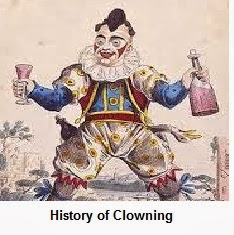
One of the pioneers of the use of modern clown costume circus star at the same time in the early 18th century is a character created Jocy Joseph Grimaldi . Jocy purported advantages that make it memorable in the history  of Clown is its ability to turn the clown character played . Jocy not just funny , but it also plays through the audience feeling sad expression , even fear .

Joseph Grimaldi

Towards the era of modern cinema , clown character inspired many prominent entertainment business . Comedian Charlie Chaplin and Buster Keaton , for example adopting the spirit of the clown in all not speak movie . Begin a new era   Clown, from street busking beginning now become an integral part of the entertainment business .

History of Billiard

Beginning

Beginning history of the sport Billiar is long and rich . This game has been played by kings to commoners. The game was played in the park as well as a popular croquet played in Eastern Europe and France in the 15th century . At the end of the game moved into the room with the table given the green cloth to resemble grass . Added a small border on the edge of the table . Ball ball driven more by long wood called " mace " . The word billiard alone is estimated to come from the word " billart " which means wooden sticks or " bille ' meaning ball . At first , the game is played with two balls on the table with six pockets like in the game of croquet wicket and straight sticks used as targets .

Game of croquet

Entering the 18th century , the goal and the target was no longer used , just balls - balls and pockets - pockets only. Since the early 1800s , the game is widely played by the nobility therefore the game is never popular with the name of the Noble Game of Billiards . But many also evidence that shows that the game has been played by people from different social levels . In the 1600s , the game is already well known . Shakespeare also mentions the game in his " Antony and Cleopatra " . 75 years later the first book about the regulations - regulations issued billiards .

A tool used

New Billiard  stick was developed in the late 1600s. When the ball is near the edge of the table , the stick is difficult to use because of the large end of the stick . If this happens then the player will usually use the other end of the stick to hit the ball . End of the stick is held called " queue " which means tail , from there then obtained the word " cue " . For the longest time , only men - men who are allowed to use the cue ; women forced to use mace because they feared would tear the coating material to the table cue sharper .

Table

Table for this game , at first having a vertical barrier at its edge that serves to prevent the ball falling . Such restraint is similar to the riverbank ( riverbanks ) until called banks . Ball - the ball can bounce up to the players would deliberately steer his shot into the barrier . Therefore , blow created a "bank shot "

Thursday, January 2, 2014

History of the Palace cipanas in Indonesia

The word is derived from the Sundanese cipanas; ci or cai means water, and heat is hot in Indonesian. The word became the name of a village, the village of Cipanas because in this place there are hot springs that contain sulfur.

Cipanas Presidential Palace began in a building that was founded in 1740 by a private owner, a Dutch landowner named Van Heots. However, during the reign of the Dutch East Indies, to be exact start of Governor-General GW Baron van Imhoff (1743), because the appeal of hot springs, built a medical building around the hot springs. Then, because of the charisma and the cool mountain air is clean and fresh nature, the building was used as a resting place of the Governor-General of the Netherlands.

Since the establishment of the reign of the Netherlands, Cipanas Presidential Palace functioned as a resting place and a stopover. However, a very beautiful natural surrounding the main attraction for the visitors, so that during the reign of the van Imhoff, a haven / retreat could switch function. Because the power of hot springs containing sulfur and because the cool mountain air and clean, the building was once used as a treatment for military members of the Company who required treatment.

Commissioner General Leonard du Bus de Pietr Josef Gisignies, for example, noted that most pleased the sulfur baths. Similarly Sirardus Willem Carel van Graaf Hogendorp, secretary (1820-1841). Additionally Daendeles Herman Willem (1808-1811) and Thomas Stanford Raffles (1811-1816) during his official put a few hundred people in the place; most bazaar of them work in the apple orchards and flower gardens as well as in rice mills, in addition to the care of cattle, sheep - sheep, and horses.

Physically, since its establishment until now, the trip changed history Cipanas Palace. Gradually, over the years, this palace grew and grew. Starting from 1916, are still in the reign of the Dutch East Indies, three standing buildings in the palace complex. Now all three are known by the name of Yudhishthira Pavilion, Pavilion Bhima and Arjuna Pavilion.

Nine years later, in 1954 in the official Indonesian President, Sukarno, established a small building, located next to the back of the Main Building. Different from other buildings, around the outer walls and the front yard and side of the building is decorated with stone-shaped bumps. By taking the form of wall hangings as well as the court was that, a unique sounding name of this building, which is building Bentol. (Bentol from Sundanese language; Indonesian counterpart in the bumps too, like mosquito bites).

Twenty-nine years later, in 1983, during the second President of Indonesia, Suharto, following two other pavilions stand, namely Pavilion Pavilion Nakula and Sahadev.

Cipans Presidential Palace has also functioned as a family residence by several families Governor General of the Netherlands. Who once inhabited the building was the family Andrias Cornelis de Graaf (the reign 1926 -1931), Bonifacius Cornelius de Jonge (1931), and the latter, which coincides with the arrival of the Japanese occupation (1942), is Tjarda van Starkenborg Stachourwer.

After Indonesian independence, the building was officially designated as one of the Presidential Palace of the Republic of Indonesia and its function is still used as a resting place of President or Vice-President of the Republic of Indonesia and their families.

Cipanas Presidential Palace is also noted important events in the history of the bow line of the Indonesian economy, namely that on December 13, 1965, Dining Room Main Building, once functioned as a cabinet convened in the context of the determination of changes in the dollar value of 1,000, 00 to Rp1, 00 , precisely during the Indonesian President Sukarno and at the time held by Finance Minister Frans Seda.

In accordance with the Presidential Palace Cipanas function, not used for receiving guests. However, in 1971, Queen Juliana also took the time to stop at the palace when visiting Indonesia.